I’m now at Dalian Train Station waiting for a train to Dandong. I arrived in Dalian the morning before last and stayed for two days.
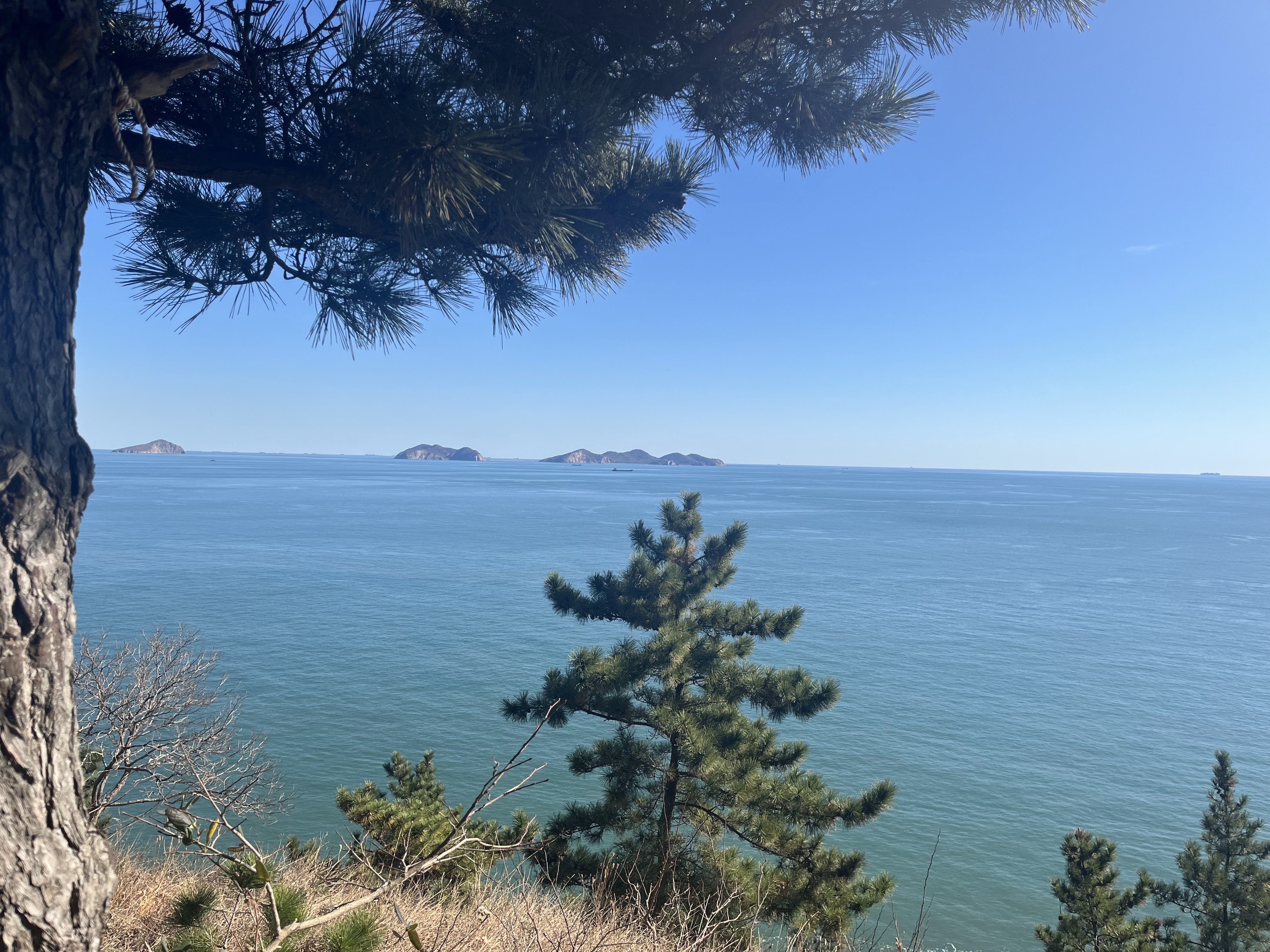
In early November, Dalian had just started its heating season. Sometimes the smog is heavy, with the city shrouded under gray smoke from suburban chimneys, but once the wind picks up, the smog is blown out of the city very quickly, revealing the cloudless sky—deep and crystalline blue, characteristic of higher latitudes (compared with southern China). When the weather clears, the sea looks beautiful. Sea-viewing is often best from high ground, so you can see the water’s aquamarine hue under the blue sky. Haizhiyun Park is an excellent vantage point: it’s a small hill along the southeastern coast of the urban area. Enter from the park’s north gate and head uphill; after a short climb you’ll reach the summit and take in the sea view. Following the mountain path, you can watch cruise ships in the distance carving tracks across the sea; closer in, you can see seaside cliffs, and the water is emerald and clear enough to reveal stones beneath the surface. Even in late autumn, Dalian’s sunlight is still intense, and the slightly dry air adds to the illusion that you’re somewhere on the Mediterranean as you walk along the coastal mountain path.
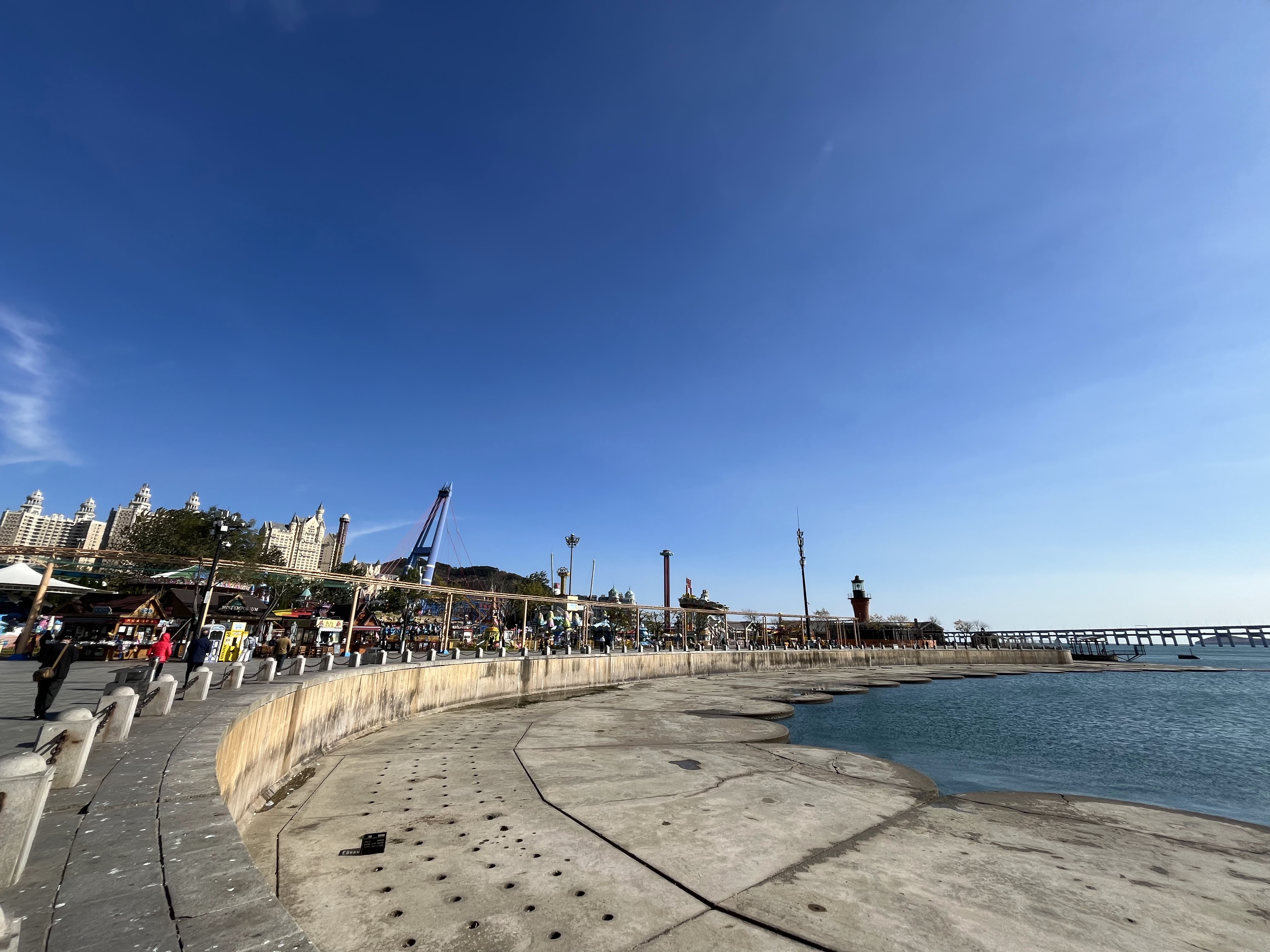
Though both are coastal cities, Dalian and Qingdao are quite different. Qingdao reminds me of Barcelona—both are elegant, leisurely tourist cities—whereas Dalian’s urban style is entirely different, with a distinctively Chinese millennium dreamcore aesthetic. Huge artificial-lawn parks, oddly designed residential buildings, seaside amusement parks, and so on—Dalian feels as if it’s lingering in a turn-of-the-century dream. On the streets you can still glimpse the city’s former economic prosperity: Lawson convenience stores from Japan are ubiquitous, yet some have severely faded signage, while in Beijing and Shanghai the Lawsons have brand-new storefronts, introduced only in recent years. I once felt this kind of old dream from the last century on the streets near Osaka’s Tsutenkaku. Japan’s Showa-era economic boom ultimately gave way to regional economic decline that persists today, and Dalian—fond of Japanese culture—has followed in its footsteps. Locals may lament this, but the distinctive cultural atmosphere is quite stirring for visitors’ visual and emotional experience.
Travel tips:
- Do come to Dalian in the off-season. Then you can enjoy cheap airfares (Spring Airlines’ Shanghai–Dalian one-way at just 290 yuan), excellent-value hotels (a standard room in an ordinary downtown hotel at 60 CNY per night), and almost undisturbed seaside scenery.
- In my view, Dalian’s food is fairly standard overall, mainly a mix of Shandong and Northeastern cuisines. Seafood isn’t particularly affordable (nor is it expensive), so I didn’t have much. What impressed me most was the seaweed buns at a neighborhood breakfast shop near the hotel—very large, with a delicious kelp flavor. Overall, there’s nothing you absolutely must try; just use Dianping to find well-reviewed restaurants.